 loading="lazy" decoding="async"
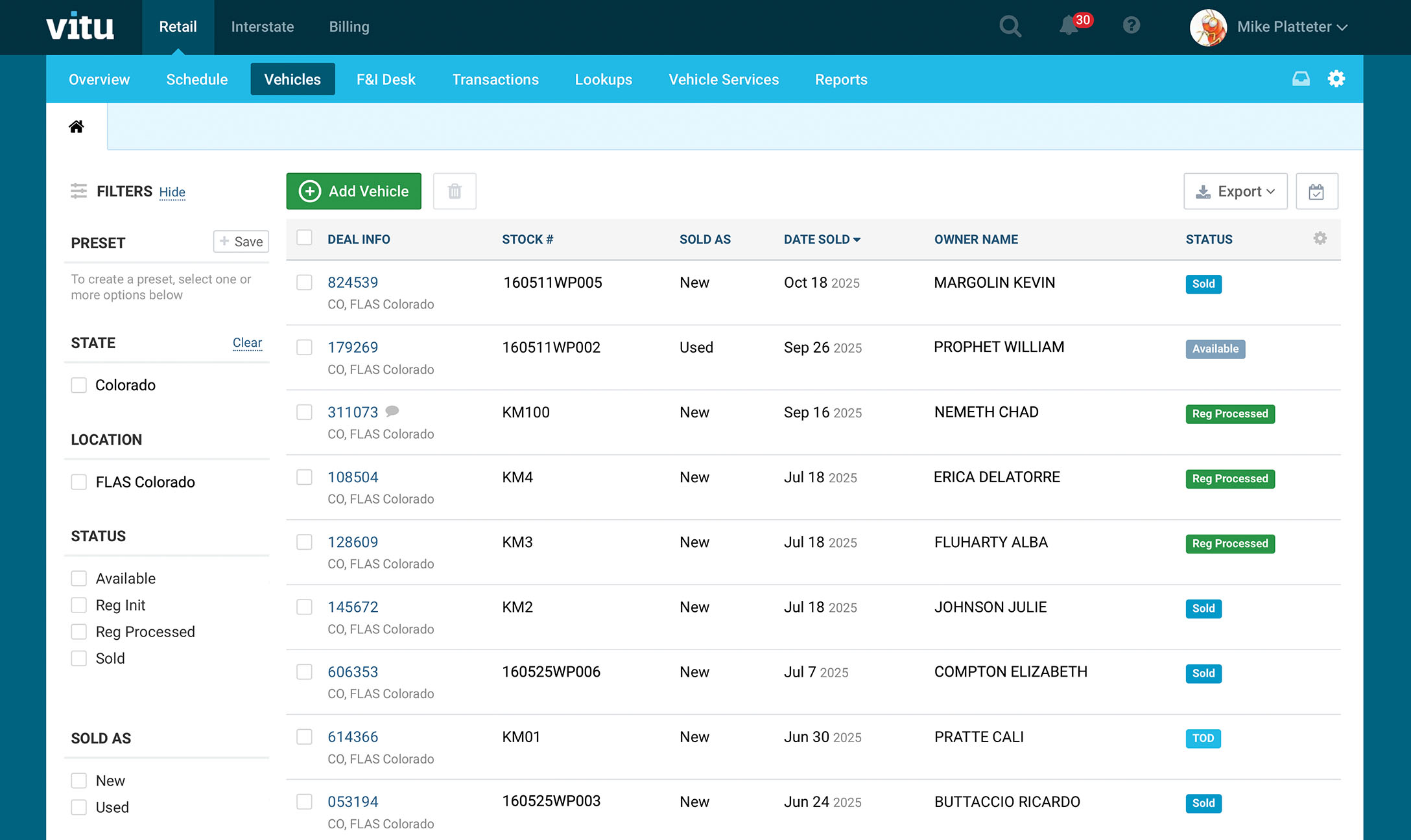
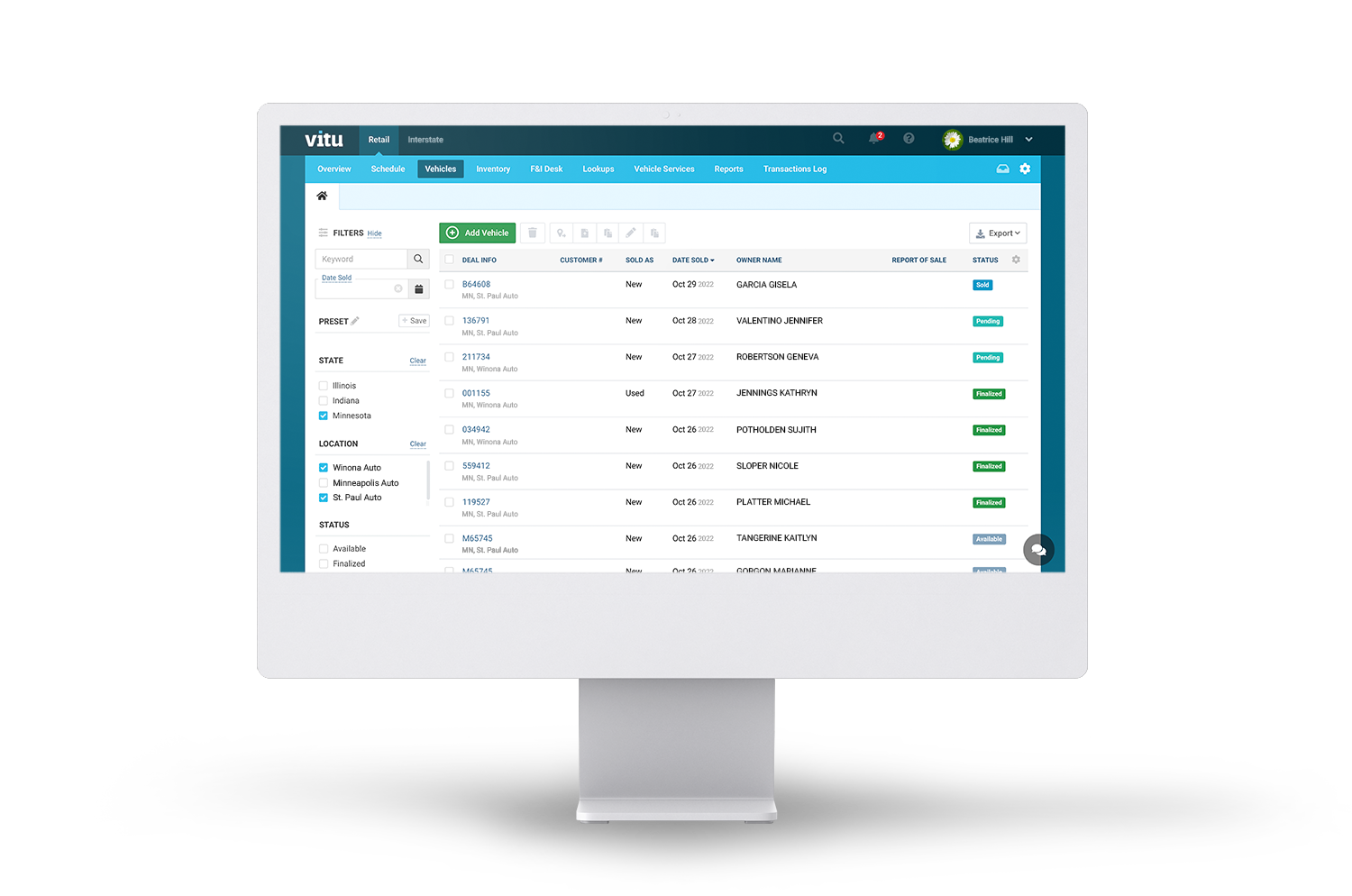
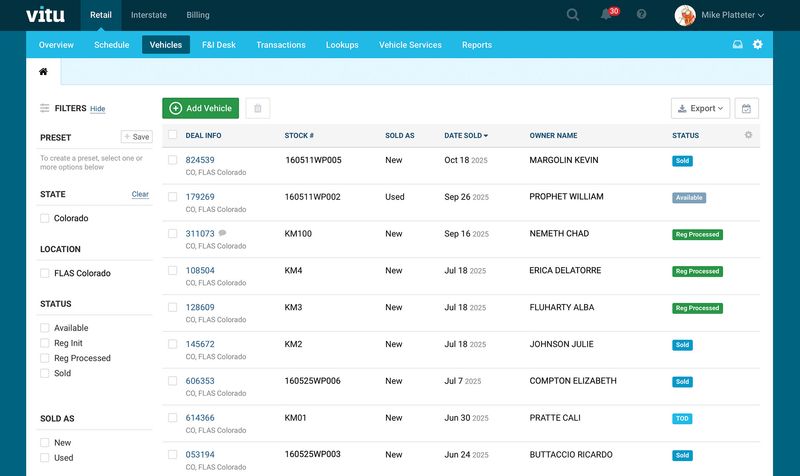
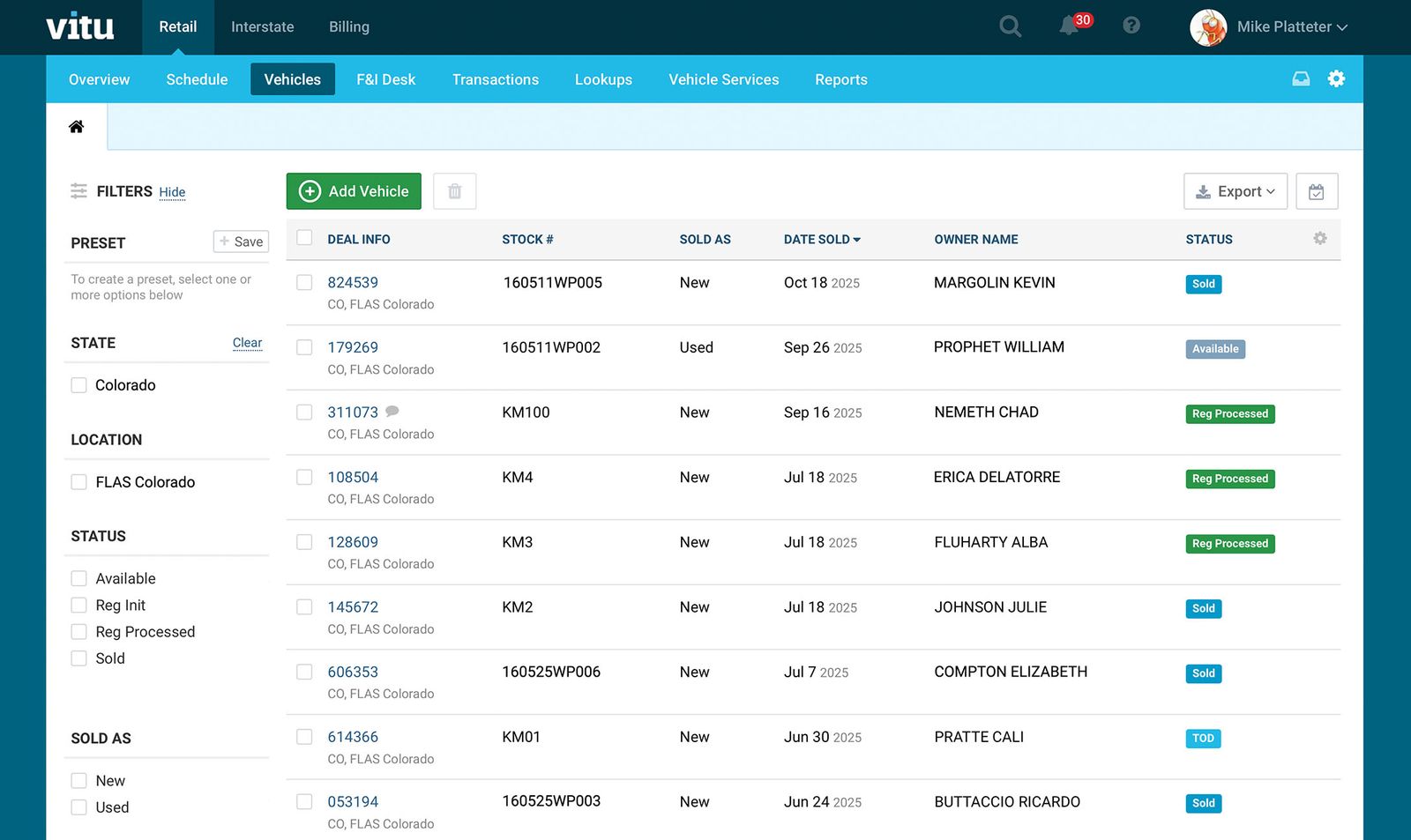

V2Pay, MVD Montana, and enterprise registration dashboards.
Beyond the core Vitu platform, my work included V2Pay mobile payment flows, V2Pay Dealer, Montana MVD registration and title workflows, and registration/title dashboard experiences connected to enterprise automotive partners including Tesla and Carvana.
Details are intentionally generalized for NDA safety; I can show additional product visuals privately during interviews.
V2Pay
Designed mobile payment experiences for regulated DMV and dealership payment workflows, including clear transaction states, confirmation patterns, and secure processing moments.
V2Pay Dealer
Created dealer-facing payment workflows for operators handling repeat transactions, payment review, and status-heavy registration tasks.
MVD Montana
Worked on full registration and title workflows for Montana MVD, translating state-specific requirements into clearer operational steps.
Tesla & Carvana
Supported registration and title dashboard experiences for high-volume automotive operators, including status tracking, exception handling, and workflow visibility.
Overview
Vitu provides digital solutions that connect automotive dealerships, lenders, and state DMV systems, enabling vehicle registration, titling, and payment processing across the United States.
As a Senior UX Designer, I led UX strategy and execution for a statewide payment processing platform adopted by the California DMV. The platform enabled dealerships and government agencies to securely process credit card and contactless payment transactions while supporting vehicle registration and titling workflows.
The work supported B2B/B2G users across dealership networks and automotive operators, including Tesla, Hyundai, Acura, Toyota, and Carvana-adjacent registration and title workflows.
Due to NDA restrictions, interface designs, private workflows, and sensitive screenshots cannot be shared. This case study focuses on product context, UX strategy, process, and generalized impact.
The Challenge
DMV systems are inherently complex and highly regulated. Users needed to move through multi-step registration workflows, strict compliance requirements, state-specific rules, payment processing requirements, and high-volume daily transactions.
Many existing workflows had evolved over time and were not optimized for modern usability standards, mobile access, or clear feedback during payment and registration tasks.
- —Support secure credit card and contactless payments
- —Simplify complex DMV and registration workflows without weakening compliance
- —Reduce user errors and uncertainty during high-volume operational tasks
- —Modernize legacy experiences for mobile usability and accessibility
- —Scale across dealership networks, government stakeholders, and state implementations
Government Systems
Highly regulated workflows shaped every UX decision.
Payment Processing
Transactions needed to feel secure, clear, and operationally reliable.
Vehicle Registration
Registration and titling flows had many steps, rules, and dependencies.
Compliance First
Usability improvements had to preserve accuracy and regulatory control.
My Role
I worked closely with product managers, engineers, project managers, and stakeholders to improve the user experience across the platform.
- —Led UX strategy for DMV payment and registration workflows
- —Conducted user research to identify pain points and inefficiencies
- —Created user flows, wireframes, and prototypes in Figma and related design tools
- —Produced requirements, process flows, project documentation, and handoff materials
- —Modernized legacy applications for mobile usability and accessibility
- —Translated complex regulatory workflows into clearer enterprise experiences
- —Scaled B2B dealership workflows across California and multi-state DMV implementations
Workflow Design
Mapped complex registration and payment paths into usable flows.
Journey Optimization
Identified friction points and simplified decision moments.
Mobile Modernization
Improved legacy workflows for more flexible access.
Accessibility
Raised usability expectations for enterprise and government users.
Research & Insights
Research focused on understanding operational behavior inside dealership and DMV-adjacent workflows. I used stakeholder interviews, dealership user research, workflow analysis, usability reviews, and process mapping to identify where complexity was creating errors or uncertainty.
- —Workflow complexity slowed users through registration and payment tasks
- —Insufficient system feedback during transaction processing created uncertainty
- —Legacy UX patterns no longer matched modern usability expectations
- —Mobile limitations reduced flexibility for users working across operational contexts
Process Mapping
Documented end-to-end tasks across payment, registration, and status flows.
Operational Accuracy
UX had to reduce mistakes without hiding required complexity.
User Confidence
Clearer feedback helped users understand what happened and what was next.
Responsive Needs
Mobile and accessible patterns became part of the modernization work.
Solution
The improved experience focused on:
The redesigned platform introduced clearer workflow structures, stronger validation patterns, simplified navigation, and better status feedback across complex registration and payment processes.
The work balanced a simple principle: make the path easier to understand without removing the guardrails that made the system accurate, secure, and compliant.
- —Streamlined registration and payment workflows
- —Clearer form structure and validation behavior
- —Improved status tracking and transaction feedback
- —Mobile-friendly patterns that supported broader accessibility
- —Consistent UX patterns across multiple state and dealership implementations
Secure by Design
Payment and registration flows kept trust and compliance visible.
Enterprise Scale
Patterns were built for dealerships, agencies, and repeat operational use.
Multi-Device UX
Legacy flows were modernized for desktop and mobile expectations.
Reusable Patterns
Consistent components reduced confusion across related workflows.
Impact
The platform supported critical DMV payment and registration services across California and dealership networks. Because of NDA restrictions, outcomes are described at a high level rather than with private metrics or screenshots.
- —Supported statewide adoption by the California DMV
- —Improved efficiency for dealership registration and payment workflows
- —Reduced user errors through clearer workflows and validation patterns
- —Enhanced usability for both new and experienced users
- —Modernized legacy applications with improved accessibility and mobile support
- —Strengthened consistency across multiple state and dealership implementations
Complex work, shared language.
Supported California DMV payment and registration workflows
Designed for dealership networks and automotive operators including Tesla, Hyundai, Acura, Toyota, and Carvana-adjacent workflows
Improved legacy workflows for clarity, mobile usability, and accessibility
Details generalized; private interface screens intentionally omitted