Q5 Payments
E-Wallet Project
Overview
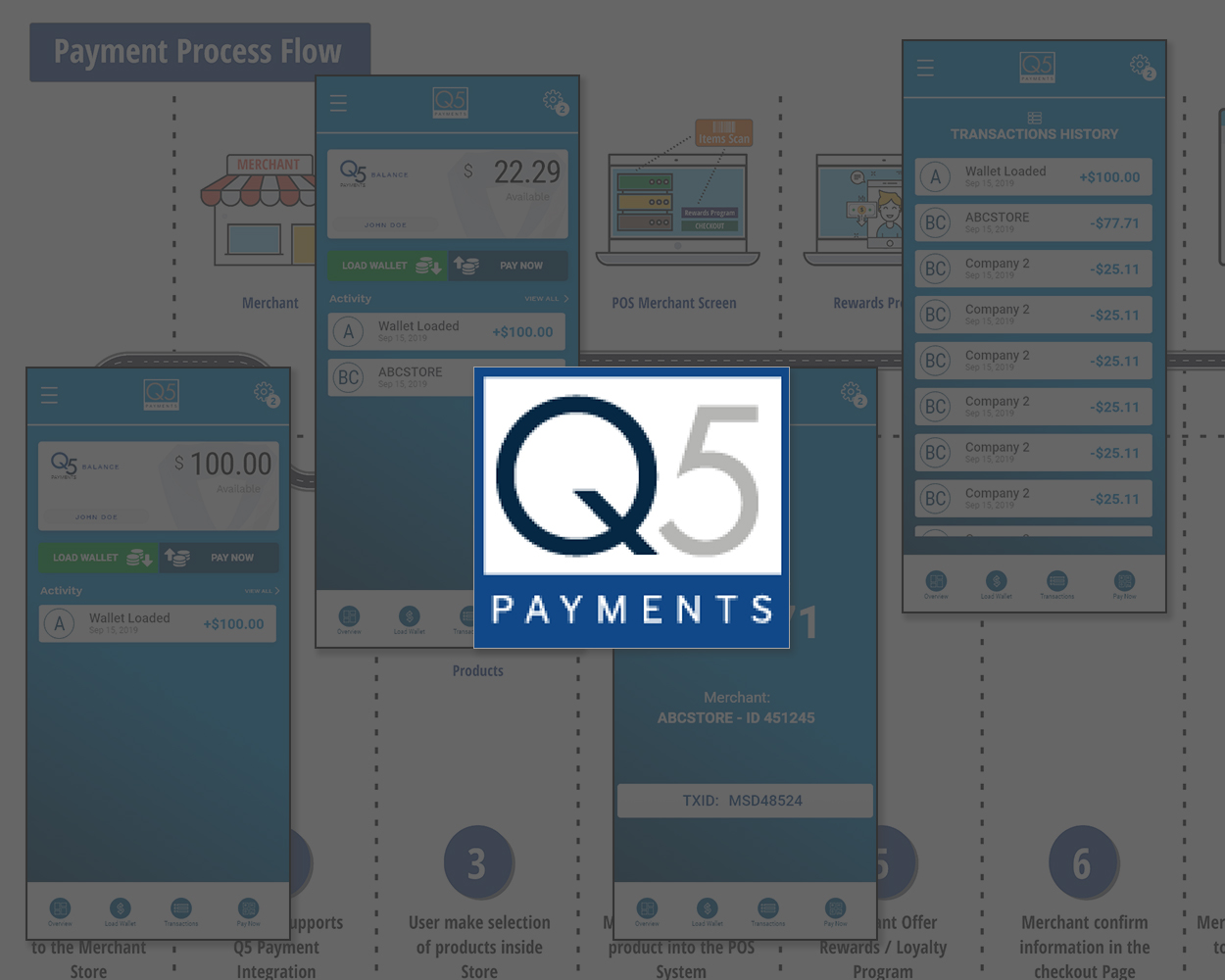
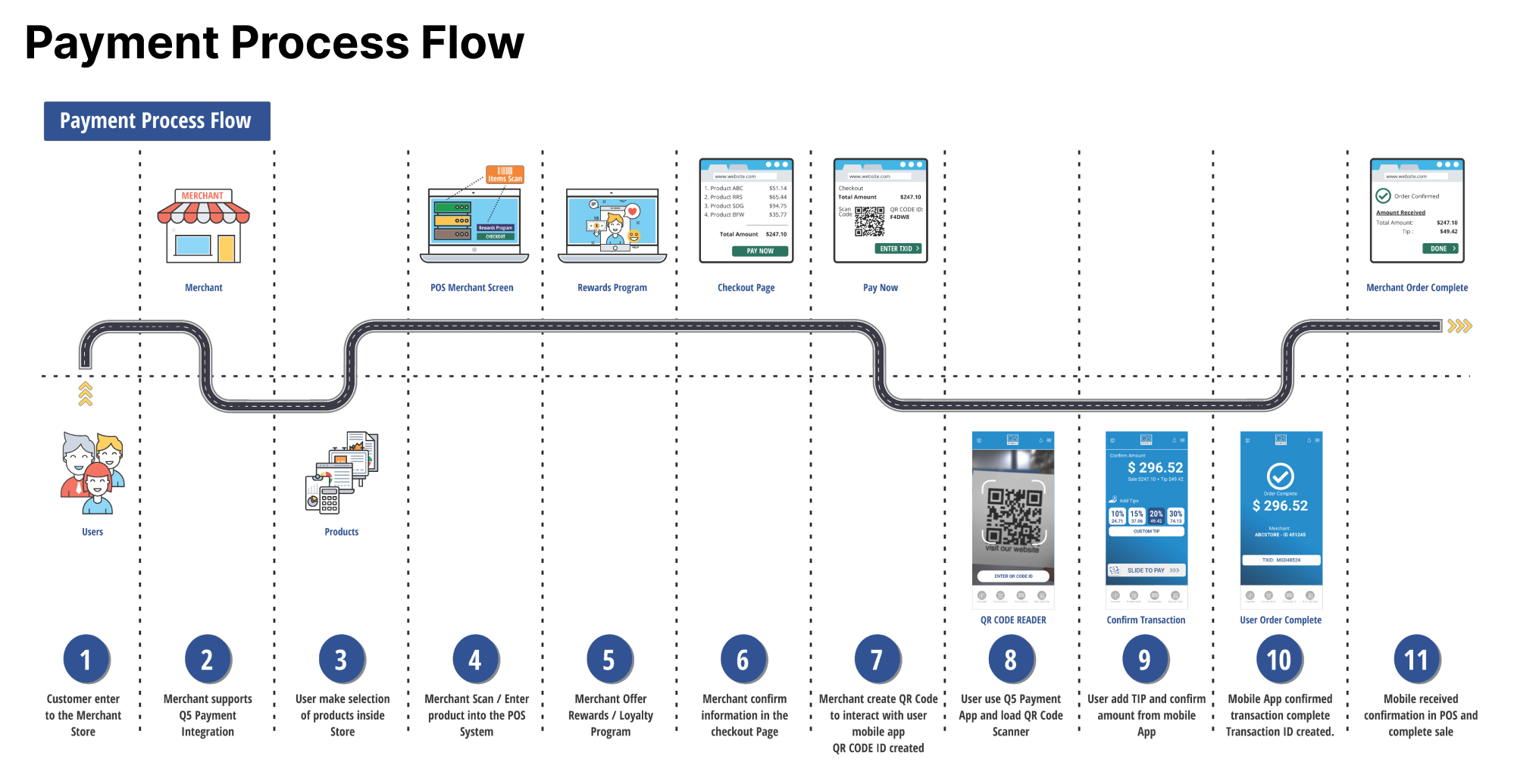
Q5 Payments is an electronic wallet designed to bring compliant, card-based payments to legally licensed cannabis merchant establishments. Users load their wallet with funds, then spend at participating dispensaries and retail cannabis merchants. A companion merchant app lets staff authenticate transaction amounts and deduct funds from the buyer’s account in real time.
The project required designing two connected products — a consumer-facing wallet app and a merchant-facing point-of-sale tool — that worked together seamlessly while maintaining a brand identity entirely free of direct cannabis references.
The Challenge
The legal cannabis industry operates in a regulatory gray zone for payments. Most cannabis businesses remain cash-only because traditional card processors refuse to service them, and many merchants claiming to accept cards are technically violating federal law and processor agreements. The result: high friction for consumers, operational risk for merchants, and a meaningful ceiling on financial growth for the industry.
Q5 Payments set out to solve this with a compliant alternative — an e-wallet that enabled card-funded payments without exposing any party to legal risk. The design challenge was equally complex.
- —The product needed to explain a genuinely unfamiliar payment model to consumers accustomed to tap-to-pay
- —Regulatory compliance constrained the branding — no direct cannabis imagery or references in any product surface
- —Two separate apps (consumer wallet + merchant terminal) had to feel like one coherent system
- —Seed-to-sale tracking and automated banking requirements added backend complexity that the UX had to quietly absorb
Regulated Payments
A wallet model had to work inside strict processor and banking constraints.
Unfamiliar Model
Consumers needed a new payment flow to feel like a normal mobile wallet.
Discreet Category
Brand and UI avoided cannabis cues while still signaling trust.
Merchant Handshake
Consumer and merchant apps had to confirm the same transaction quickly.
The design had to make a novel, compliance-bound payment flow feel as ordinary and trustworthy as a standard mobile wallet.
My Role
I joined as UX Designer, responsible for translating the product vision into a complete, buildable design specification — from initial concepts through final handoff. This was a ground-up engagement: no existing design system, no prior product to build from.
- —Conducted stakeholder interviews to surface product requirements and compliance constraints
- —Ran competitive analysis across fintech wallets and emerging cannabis payment solutions
- —Defined information architecture for both the consumer and merchant apps
- —Designed interaction flows, UI patterns, and visual language in Adobe XD
- —Established a design system and discreet brand direction that worked within regulatory constraints
- —Delivered final specifications to the product team for usability testing and development
Stakeholder Discovery
Mapped requirements across compliance, merchant ops, and product vision.
Consumer Wallet UX
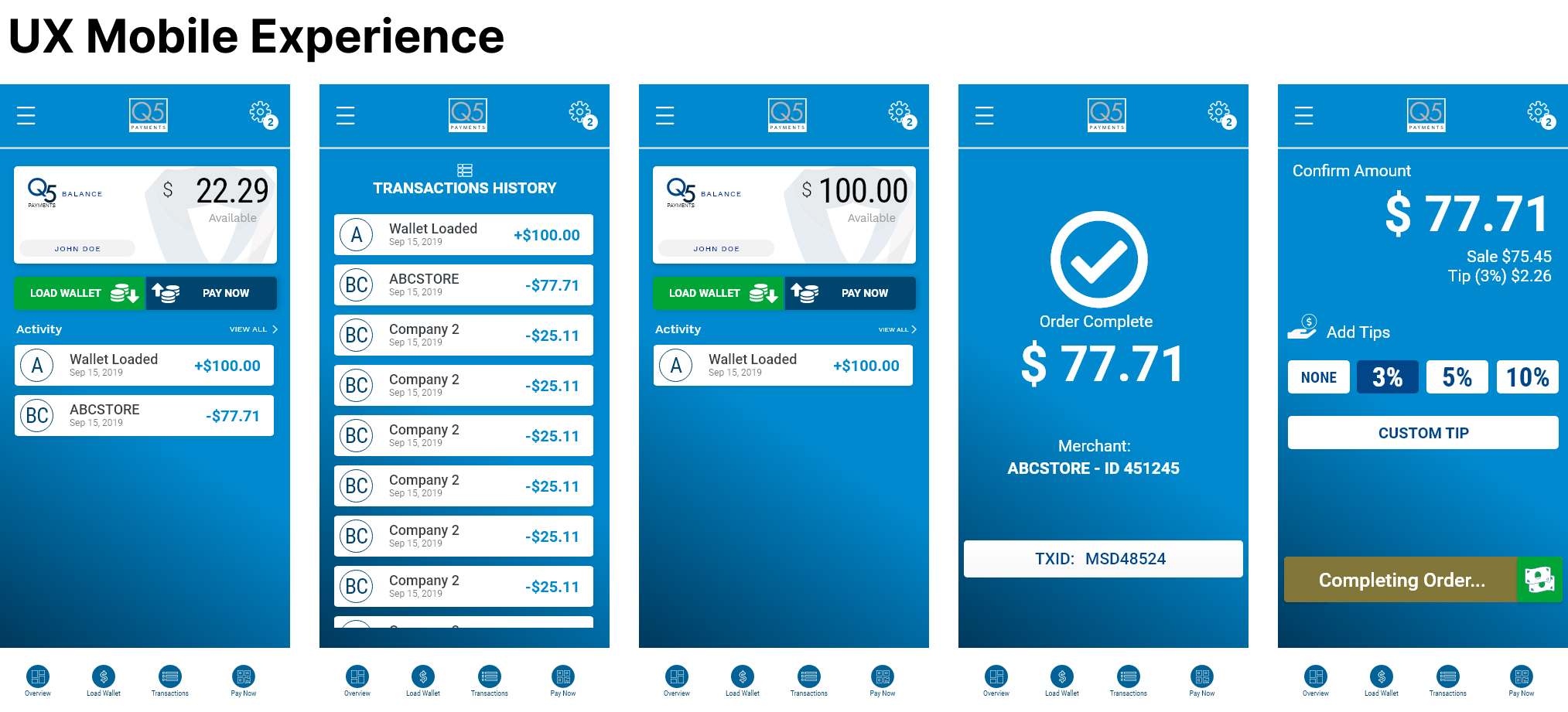
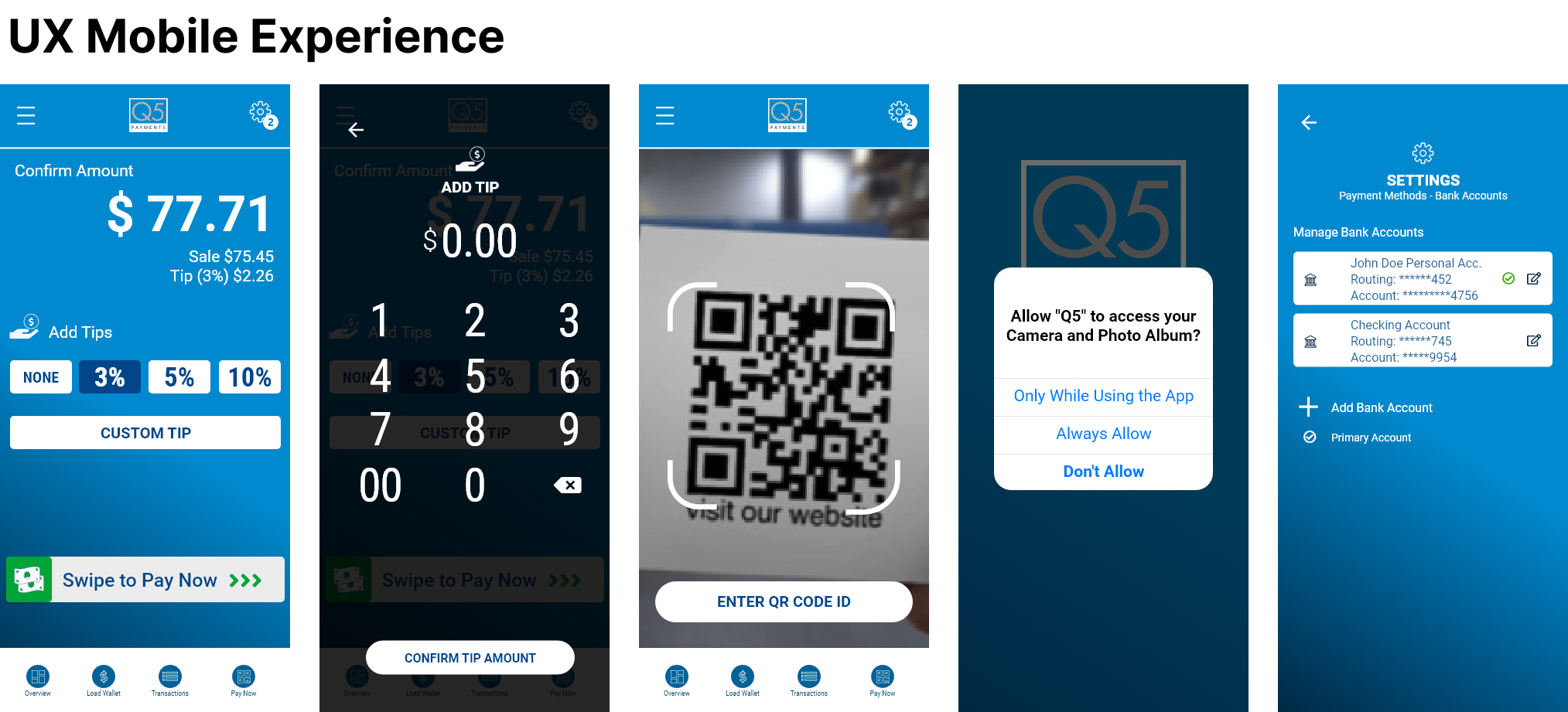
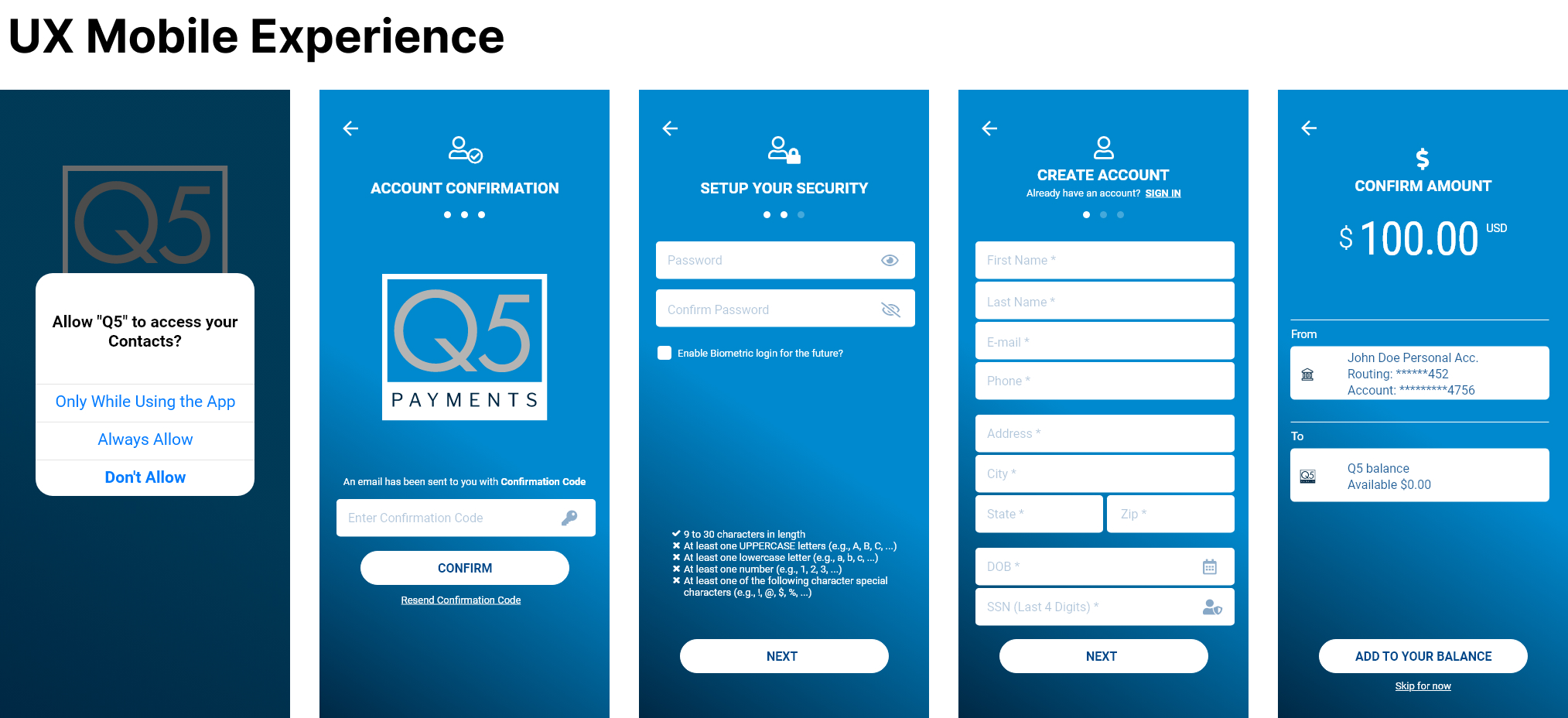
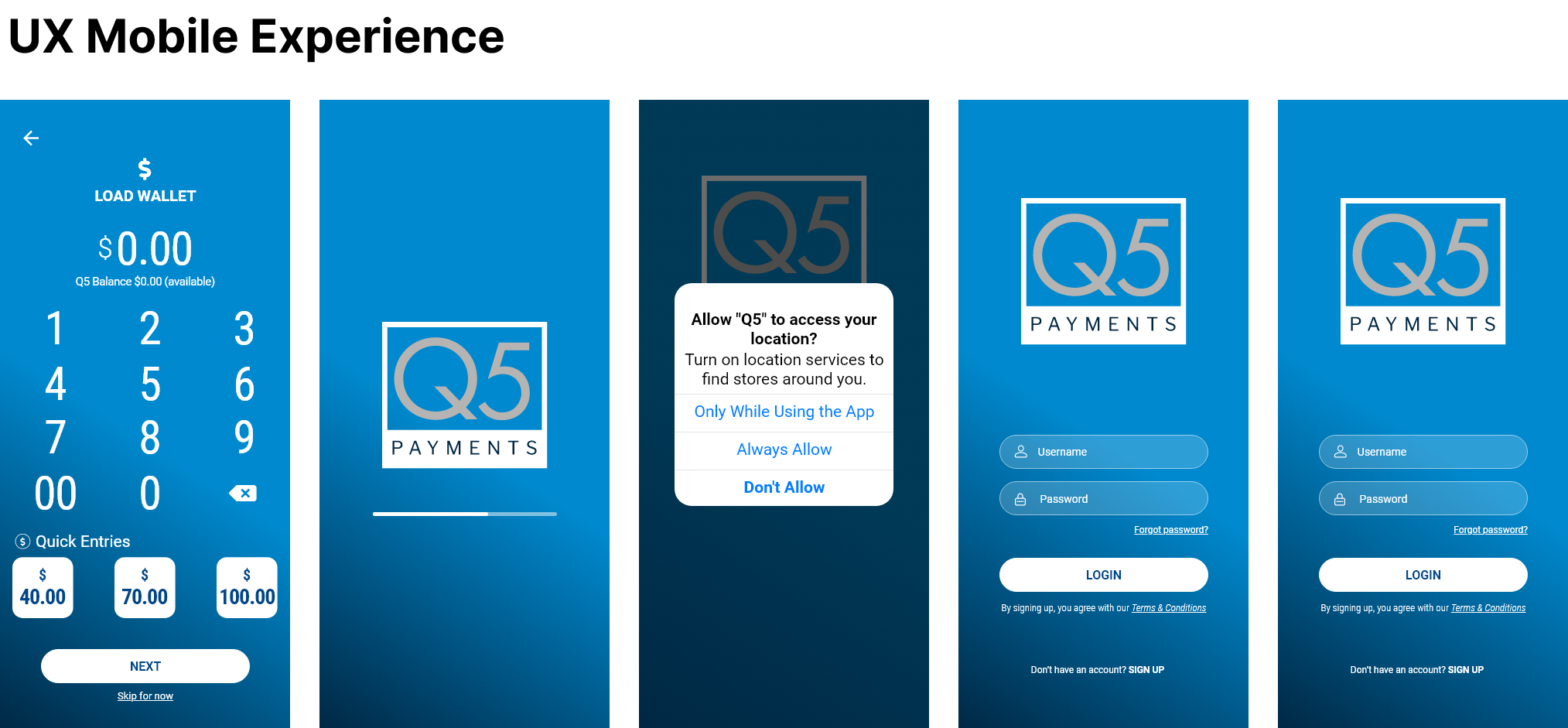
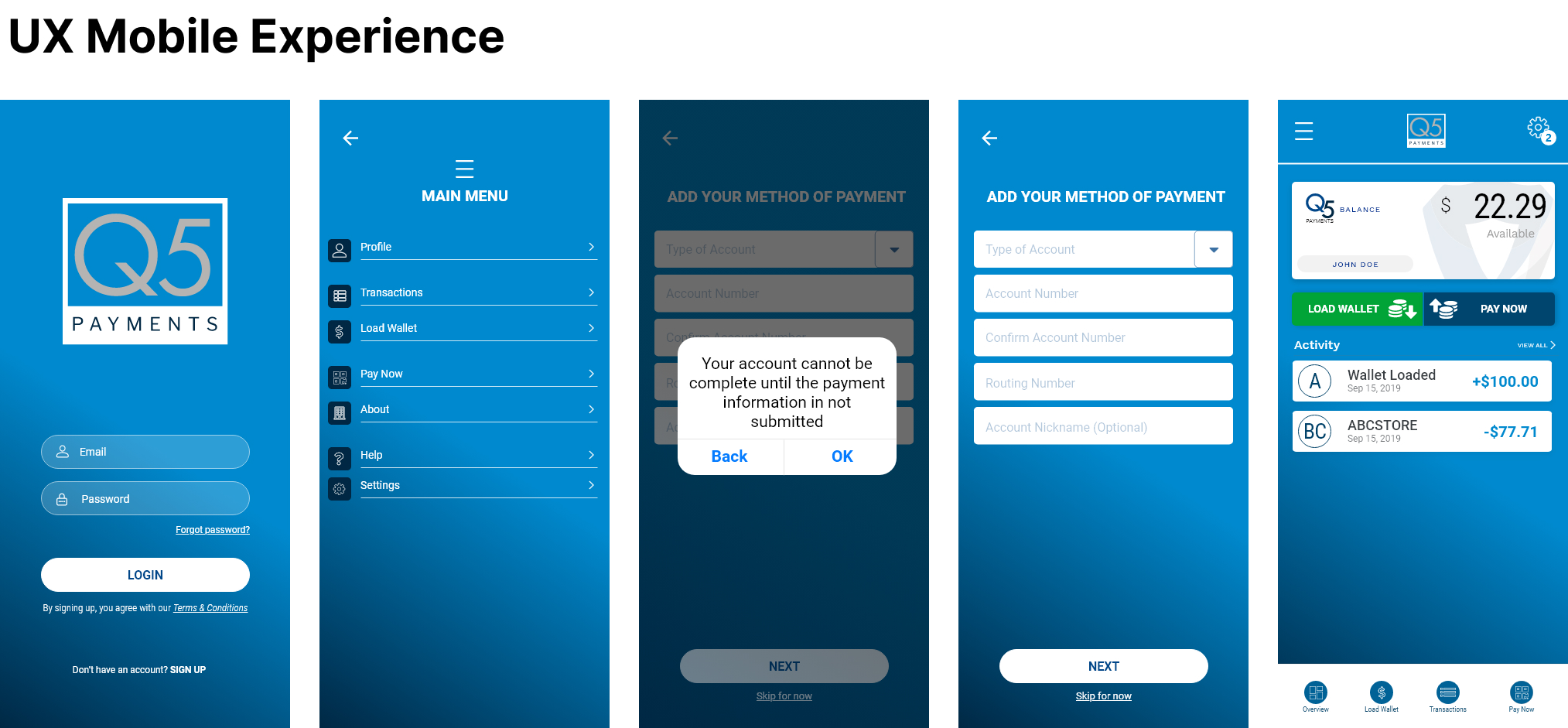
Designed onboarding, top-up, balance, history, and in-store spend flows.
Merchant App UX
Built the counter-speed flow for amount authentication and deduction.
Buildable Specs
Delivered detailed interaction and visual specs for testing and development.
Research & Process
Research started with stakeholder interviews to map the full payment lifecycle — from how a consumer loads funds, to how a merchant authenticates and processes a transaction, to how banking reconciliation worked on the back end. This early mapping was critical: the compliance layer touched every step of the flow, and design decisions that seemed cosmetic (like button labels and confirmation screens) had real legal implications.
Competitive analysis covered two categories: mainstream mobile wallets (Venmo, Cash App, Apple Pay) for UX pattern reference, and the small number of compliant cannabis payment tools that had begun to appear in market. The mainstream wallets informed the consumer mental model to build toward. The cannabis-specific solutions revealed gaps — most were transactional and bare, with little attention to consumer trust or merchant usability.
From that foundation, I mapped flows for both apps, prioritizing clarity at every compliance-sensitive step and building toward a UI that felt familiar and low-friction despite an unfamiliar underlying mechanism.
Solution
Key design decisions across both apps:
The consumer wallet centered on three core flows: account creation and verification, wallet top-up, and in-store spend. Each was designed to minimize friction while making the compliance checkpoints feel natural rather than obstructive. The UI language was clean and deliberately generic — familiar enough to read as a standard fintech product, distinct enough to establish brand identity.
The merchant app focused on speed and certainty at the point of transaction. Merchants needed to authenticate amounts, confirm deduction, and close a transaction in seconds — the UX was streamlined to that specific job.
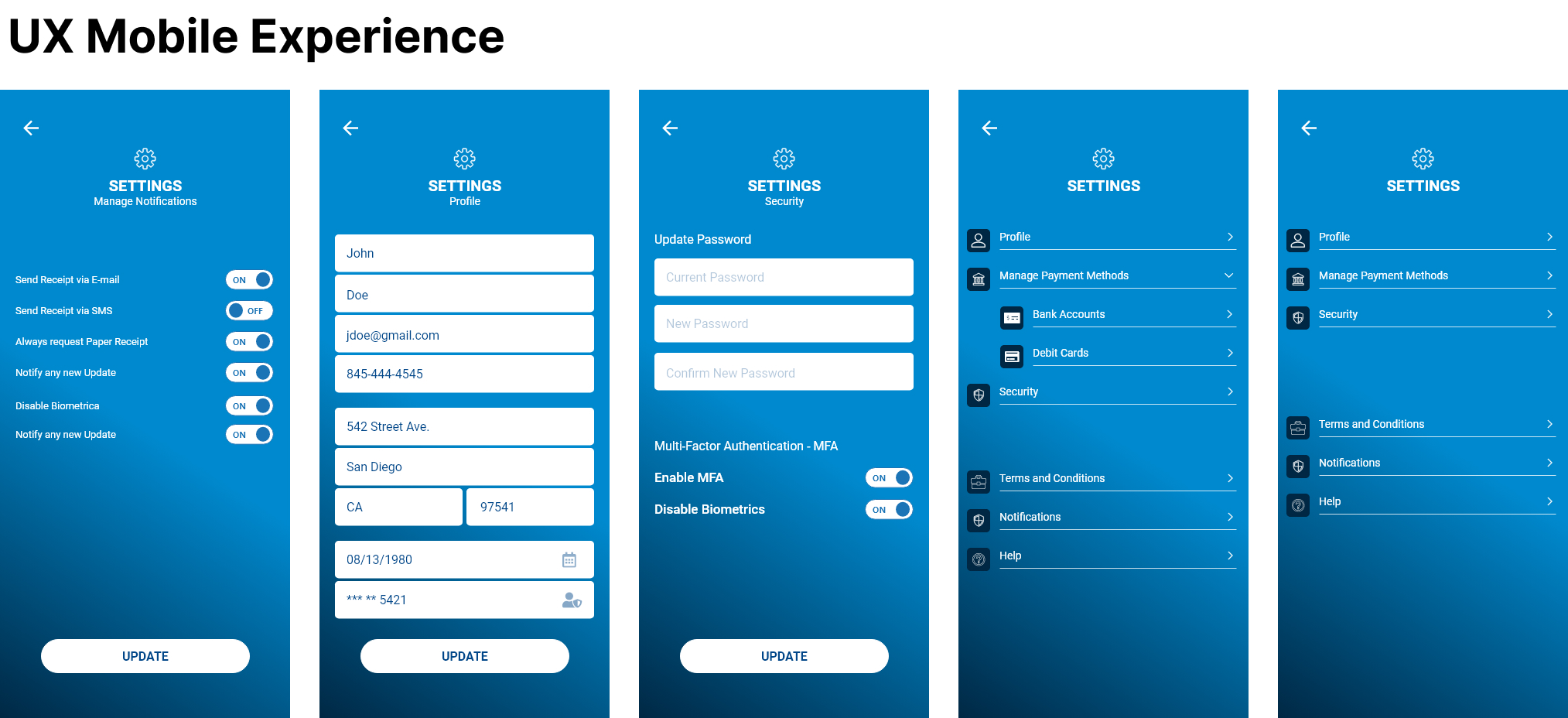
- —Used familiar wallet metaphors (balance display, transaction history, top-up flow) to reduce consumer onboarding friction
- —Kept all cannabis-adjacent language off product surfaces — the brand communicated compliance and security, not category
- —Designed the merchant confirmation screen as a single-action step to match real dispensary counter speed
- —Built a shared design system that maintained visual consistency across both products without requiring separate design tracks
Wallet Familiarity
Used recognizable fintech patterns to reduce learning cost.
Trust Language
Security and compliance cues carried the brand without category exposure.
Two-App System
Consumer and merchant experiences shared one interaction language.
Validation Ready
The product team could move into usability testing with a complete model.
I delivered complete design specifications for the initial product version. The product team and researchers then ran usability tests with target users, and the designs were iterated based on that feedback — a structured handoff that kept the design process credible and actionable.
Design Outcomes
Q5 Payments clarified a genuinely complex, compliance-constrained payment problem into a coherent, usable product. The design work produced a specification the engineering and product team could validate and build against — no ambiguity in the flows, no gaps in the merchant-consumer handshake, no exposed compliance liability in the UI language.
- —Delivered a complete, buildable design specification for both consumer and merchant apps
- —Established a design system and brand direction that held regulatory constraints without feeling restrictive to users
- —Created a scalable foundation that the product team could iterate on through usability testing
- —Defined the UX model for a payment category that had no clear precedent in the market
Results & Impact
The work demonstrated that high-stakes compliance constraints don’t have to produce unusable products — clear information architecture, familiar interaction patterns, and a disciplined brand voice can make a genuinely novel payment mechanism feel trustworthy and approachable.
More work in the index.